The iPad is fast becoming a legitimate music composition tool—thanks in large part to its own version of GarageBand, Apple's seminal, entry-level music app. Earlier this year with version 1.2. Does garageband work on ipad.
Virtual DJ Software, MP3 and Video mix software. VirtualDJ provides instant BPM beat matching, synchronized sampler, scratch, automatic seamless loops. Free download virtual dj pro for windows 8.
GarageBand is a fully equipped music creation studio inside your Mac — with a complete sound library that includes instruments, presets for guitar and voice, and an incredible selection of session drummers and percussionists. Nov 01, 2015 I think this is your issue.MIDI will not output sound, it sends patch signals. I have a Roland EXR-5S. In order to hear what you are playing and to make the instrument show in Garageband, use the left audio out on the keyboard then connect that to your mac. Open Garageband and add as a new real instrument. May 06, 2019 Turn Your Mac Keyboard Into a GarageBand Piano,Using the GarageBand Onscreen Keyboard. Open GarageBand through double-clicking it in the Applications folder or the usage of the Launchpad at the Dock. Select File New from the GarageBand menu bar. In the higher left nook of the window that opens, pick New Project. Play the Keyboard in GarageBand for iPad. Using the Keyboard Touch Instrument, you can play different keyboards, including grand piano, electric piano, organ, clavinet, and synthesizer, by tapping the keys. You can choose a keyboard sound, move higher or lower on the keyboard, hold notes, and change the keyboard layout and size. Sep 18, 2010 I have a MIDI keyboard that can't adjust octaves on the hardware, and I don't want to use musical typing. I figure there must be a way to access octaves lower than C1! My keyboard starts at C1 and I cannot figure out how to get Garageband to allow me to play notes lower than that via my MIDI keyboard.
- Garageband Piano Keyboard
- Connect Keyboard To Garageband
- Best Midi Keyboard For Garageband
- Garageband Keyboard Mac
- Play Piano On Garageband
By Malcolm Owen
Thursday, August 09, 2018, 07:18 am PT (10:18 am ET)
:max_bytes(150000):strip_icc()/GarageBandKeyboard-5c002035c9e77c0026e2c226.jpg "Open Piano Keyboard On Garageband Mac")
For those getting started in music creation, GarageBand is a great tool to produce tracks, with a plethora of samples and ways to mould a composition to what you want. It is also quite flexible, capable of recording audio from microphones and plugged-in instruments, and accepting MIDI input from keyboards that can be used with the software's musical instruments.
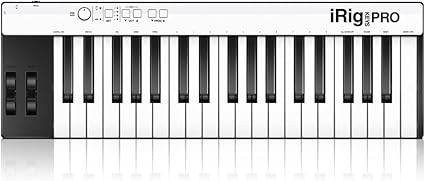
While it is possible to select when notes should be played in a track with a mouse, some people prefer performing the musical element on a MIDI keyboard, with the notes recorded for later fine tuning. This is desirable, but since it requires a separate keyboard, this could be impractical for some users, such as those who cannot afford the extra equipment, or simply do not have the room for another peripheral.
As a solution, Apple included Musical Typing, which allows users to use their Mac's keyboard as a makeshift musical keyboard, assigning different keys to notes. This guide will explain how to get started with the feature.
Getting Started
Open GarageBand on your Mac. Either open an existing project or create a new project, which can be done by selecting New Project in the top left of the Choose a Project window, then Empty Project, then Choose.
If it is not already displayed, open up the Choose a Track Type window by clicking the small plus symbol above the track list. Select Software Instrument
Garageband Piano Keyboard
then Create.This will create a new blank track in your project.
Once the track is created, select Window in the menu bar, then Show Musical Typing. You can also bring it up with the keyboard shortcut Command-K.
At this point, you may also wish to change the instrument the keyboard will play. This can be done by selecting the instrument from the library on the left-hand side of GarageBand.
Using Musical Typing
Connect Keyboard To Garageband
 The Musical Typing window shows a simplified and compact keyboard, with letters assigned to notes on a keyboard. The middle row of the keyboard (starting ASDF) corresponds to white keys, while the top letter row (starting QWERTY) relates to sharp and flat black keys.
 Pressing a key will play the note for the duration the key is held down for, ending once the key is released. Pressing Tab will sustain the note, holding it while Tab is pressed, even if the relevant key for that note is released.
Other keys on the keyboard perform other actions and effects. For a start, pressing 1 or 2 while holding a note will alter the pitch up and down. Numbers 3 through to 8 alter the modulation of the note.
The C and V keys will alter the velocity of typed notes, namely how hard each note of the virtual instrument is being played. The higher the velocity, the louder and stronger the note.
The X and Z keys change the octave of the keyboard, making the available notes higher or lower. The on-screen keyboard shows which region of the full-size keyboard is being used, with users also able to change where they are playing by dragging the highlighted area left and right.
Any notes played while GarageBand is recording is saved to the project, and can be tweaked later, just like a MIDI keyboard's input.
Another Option
There is a second software keyboard available to use in GarageBand. In the Musical Typing window, select the piano icon in the top-left corner to switch to a representation of a piano keyboard. You can select the icon to the right to switch back to Musical Typing.
This second keyboard can be used to play with the mouse, by clicking individual notes. This may be useful for musicians who need to visualize a note's position on a piano keyboard, or to have a wider array of notes available to use.
There is a tradeoff with this mode, in that it doesn't actually use the Mac's keyboard to play notes, instead relying on single note clicking. By contrast, the Musical Typing allows for multiple notes to be played simultaneously, making it better for those used to playing chords.