Apr 07, 2020 How to Transfer Cassette Tape to Computer. This wikiHow teaches you how to copy audio from a cassette deck onto a Windows or Mac computer. After you've connected your cassette deck to your computer's 'microphone' (or 'line-in') input via. IZotope, Inc. Is an audio technology company based in Cambridge, Massachusetts, United States.iZotope develops professional audio software for audio recording, mixing, broadcast, sound design, and mastering which can be used in wide range of Digital Audio Workstation (DAW) programs.
- Sound Quality
- Ease of use
- Features
- Bang for buck
- Overall:
Unwanted noise is the ultimate menace. This is one thing on which all audio professionals can agree! In music, post production, restoration and archiving, or even forensics, engineers everywhere are battling daily with a never-ending onslaught of buzzing, clicks, pops, hiss, clips, crackles and a heap of other unpleasant sounds that haunt our tracks.
Over the years there have been a number of plugin-based solutions to tackle these problems – some more successful than others. In the past few years, one name comes up over and over again among audio professionals as the “one stop shop” for audio noise reduction and restoration. Of course, I’m talking about iZotope’s flagship RX software suite. And now, with their latest and greatest version – “RX 3 Advanced” – iZotope has added two brand new plugins into the RX fold: Dialogue Denoiser and Deverb.
Let’s jump in, and see what RX 3 Advanced is all about!
TECH SPECS: RX 3 Advanced is a Native-only plugin for MAC and PC and retails for $1,199. Formats are AAX, RTAS, AudioSuite, VST, VST3 and Audio Unit. Compatible with the new 64-bit Pro Tools 11 and 32-bit hosts including Pro Tools 7.4 to 10 as well as Avid Media Composer, Nuendo, Cubase, WaveLab, Logic, EDIUS Pro 6.5, Final Cut Pro, Audition, Premiere, SONAR, ACID, Digital Performer, Sound Forge Pro, Vegas Pro, and many more.
WHAT IT DOES: RX 3 Advanced is a complete suite of audio production plugins for professional audio repair and restoration. RX 3 can be used as individual plugins within your host DAW or as a standalone application (included) for more detailed offline work. Also bundled with RX 3 Advanced is the brilliant iZotope Insight metering suite – of which you can read my in-depth review here.
IN USE:
RX 3 Advanced is comprised of individual plugins (both real time and AudioSuite) within your host DAW allowing users to fix tracks quickly and efficiently. All of these RX 3 modules are also available for use in the standalone RX application along with some unique extras.
Two brand new plugins have been added to the RX 3 Advanced version since its upgrade from version 2 – they are: Dialogue Denoiser and Deverb. Let’s take a look at each of the core units individually, as well as the new additions in the new “Advanced” version:
Denoiser – Denoiser is the plugin in the RX suite that gets the most consistent use on my sessions both in music and post. Denoiser controls the level of stationary noise present in an audio track. Stationary noise generally includes tape hiss, microphone hum, fans, highway traffic, HVAC systems and any similar sounds which tend not to change in level or spectral shape significantly throughout the recording.
To use Denoiser, simply identify a section of your audio track that is just the noise and select “LEARN” in Denoiser. This creates a noise profile that Denoiser uses to filter out the noise from your track. The two basic sliders for Threshold and Reduction allow users the primary controls over the noise reduction. Artifact Control and Quality sliders make up the main face of the Denoiser plugin with an additional set of Advanced noise floor settings available in a separate window.
With Denoiser, I usually work with the AudioSuite plugin to process the denoising directly to my track. iZotope’s RX 3 plugins have excellent finely-tuned default settings, which make for fast work. Simply load in your noise profile, select the whole file you want to denoise, and render. After spending some time with Denoiser, you will start to get a feel for when your tracks may call for slightly more or less on the Reduction fader.
Don’t forget to create a duplicate playlist for your raw tracks before processing! This will allow you to return to your original unprocessed tracks at any time should you decide to reprocess anything.
Declicker & Decrackler – Together, these two plugins tackle clicks, pops, mouth noises, thumps, and similar intermittent noises that are prevalent in modern recordings as well as older source material such as older vinyl and other degraded audio sources. The main difference between Declicker and Decrackler is that Decrackler is designed to handle a more continuous stream of irregularities in your audio whereas Declicker handles more sporadic clicks and pops.
Declicker is one of those magical tools that just works and is an absolute essential for me these days. The Declicker module alone has saved entire projects for me and for many other engineers I know. A good example of that is a live album I recently tracked where the multi-track capture rig was on a separate power current than the house PA. This is never an ideal situation, of course, but unfortunately these were the conditions of this site.
Listening back the night of the show, the tracks all sounded pristine. But, when listening critically at home during editing and mixing, I started noticing a consistent light clicking on the electric guitar tracks, vocals and keys. 60-70 percent of the clicks were borderline inaudible when the whole mix was up but the rest were very audible throughout the album.
I used RX 3’s Declicker module to clean up nearly all of the guitars, vocals and keys on the entire album. While the work was a bit tedious, Declicker alone absolutely saved this project for me. Declicker removed tens of thousands of errant clicks from my tracks without ever adding unwanted degradation or artifacts.
Declipper – Declipper repairs digital and analog clipping from A/D converters pushed too hard or magnetic tape that’s been over saturated.
The basic controls for Declipper are Threshold and Makeup gain. It does take some trial and error to find what will work best for your audio but Declipper does do an excellent job repairing the harsh distorted qualities that often spike in TV and film mixes and stick out unnecessarily. Watch the demo here.
Unlike Denoiser and Declicker, Declipper seemed to introduce some artifacting into the signal as a byproduct of the processing of the clipped signal. Great results can be achieved but of course the source audio will always be the most crucial factor in determining just how effective Declipper or any noise reduction plugin can be.
Hum Removal – RX 3’s Hum Removal tool is designed to target low frequency buzz or hum often caused by electrical grounding issues. Hum Removal includes a series of notch filters that can be set to remove the base frequency hum at 50 or 60hz as well as the resulting harmonics.
The Hum Removal plugin comes with presets for 50 and 60hz as well as a “Free” setting which allows the user to set the notch frequency, which is chased by each of the harmonic notches. Hum Removal does an excellent job repairing electrical hum without disturbing even the most delicate acoustic based instruments.
Spectral Repair – RX 3’s Spectral Repair is a tool that is most often used to repair sudden unwanted noises in a section of audio. Spectral Repair displays audio visually in both waveform and spectrogram mode simultaneously. This gives users both a time-based and frequency-based view of the offending audio in their project allowing for quick and easy repair of sounds that only a few years ago editors would have been forced to cut around or leave in unchanged. A good example of this would be a loud whistling during a concert recording, or a siren that appears in the background during crucial dialogue or an interview. These types of unwanted frequency specific problems are the perfect job for Spectral Repair.
RX 3’s manual lists a number of unwanted sounds that Spectral Repair can attack. Many of these sounds we’ve all dealt with at one time or another but frankly I’d never even considered them possible to fix! (i.e. squeaky chairs, coughs, mic stand bumps, clattering dishes, mobile phones ringing, metronome click tracks, background chitchat, dropouts from broken audio cables, fret and string noise and dog barks.)
To use spectral repair, load in a small section of your track that includes the offending audio. Once loaded, there are different selection tools such as Lasso, Time Selection, Frequency Selection and Brush, which allow users to select (as specifically as possible) the problematic piece of audio. From there, you can use either the Attenuate, Replace, Pattern or Partials + Noise modules to fix the problem depending on how badly damaged the audio file is.
Now that we’ve covered the core plugins in RX 3, let’s take a look at some of the new additions to the RX 3 Advanced package:
Dialogue Denoiser – The beauty of this plugin is its simplicity. Dialogue Denoiser is a stunningly powerful tool for high-quality denoising in real time with minimal controls and zero latency. In the vast majority of cases, Dialogue Denoiser works brilliantly in auto mode right ‘out of the box’. Simple controls for Threshold and Reduction make for extremely quick work.
Most recently, I’ve used Dialogue Denoiser on several short film projects. I’ve settled on creating an intermediary Aux bus specifically for Dialogue Denoiser with the input routed from all my dialogue tracks and the output sending to my dialogue master bus which allows me to control the Reduction and threshold settings of Dialogue Denoiser with Pro Tools automation when necessary for dialing in exactly the right amount of background noise and ambience.
I really can’t overstate just how quick and easy it is to achieve stunning results with Dialogue Denoiser. It is easily the quickest ‘set it and forget it’ Denoising plugin I’ve ever used.
Of course, users also have the ability to select “manual mode” and create a noise profile dedicated to the track that’s being worked on for more precise control of Dialogue Denoiser. Thus far for my projects, I’ve found the auto mode to be completely usable on its own without providing any sort of learned noise profile.
Deverb – Deverb is one of those “how do they do that?” plugins. Deverb allows users control over the ambient space captured in a recording. As with Dialogue Denoiser, Deverb works in real time either in automatic or manual mode to reduce unwanted room decay and reverb in dialogue and spoken word. Unlike Dialogue Denoiser, Deverb does introduce about 9,700 samples of latency which is more than enough for any DAW with delay compensation to handle.
Basic controls include: Reduction fader, four faders for Low, Low-mid, High-mid, and High on the Reverb Profile, which controls the amount of Deverb effect applied per-band; Tail Length which controls the decay of Deverb processing; and Artifact Smoothing which controls the frequency accuracy of Deverb processing.
Deverb does a commendable job tightening up roomy audio which can help achieve a sharper mix for post-production projects. Deverb will, of course, achieve better results when it has better source material to work with. Dialogue that is already very upfront and present will yield extraordinary results from Deverb while very roomy/distant voice and dialogue recordings can also be helped but will also have quite a bit of artifacting.
These two powerful new plugins add tremendous value to the Advanced version of RX 3. Dialogue Denoiser in particular is really a must-use plugin for me on all dialogue heavy post-production jobs.
RX 3 Standalone Application
In addition to the DAW accessible plugins, RX 3 Advanced comes with its own standalone application for tackling problematic audio issues offline. The standalone application gives users access to the full palate of RX 3 Advanced tools for cleaning up audio. All of the above-mentioned modules are available inside the RX 3 standalone application.
Deconstruct – Deconstruct is an additional tool available only in the RX 3 standalone application. Deconstruct allows users surgical control over the level of noise and tones in an audio track independent of each other. An example of where to use Deconstruct would be to reduce breath noise in wind instrument recordings such as flute or saxophone.
The controls for Deconstruct are simply faders for Tonal Gain and Noisy Gain. The results of Deconstruct are so unique, you’re really taken by surprise the first time you hear its results.
Several engineers I’ve showed this feature to expressed total disbelief at Deconstruct’s ability to remove not the noise but the pure tone leaving behind just the noise. Of course, Deconstruct can work both ways to subtlety reduce air and noise qualities. This particular demo (above), however, highlights the creative possibilities of Deconstruct.
Additional New Features
This review would feel incomplete if I didn’t include at least a quick rundown of some of the additional new features available in the RX 3 Advanced bundle:
iZotope Insight – This comprehensive metering tool, which is a must-have for compliance with broadcast standards, comes bundled with RX 3 Advanced.
Multicore Processing – RX 3 has been optimized to use every available core in your machine to make quick work of intense audio processing jobs.
Multi-file workflow – RX 3 can open, edit and process multiple files at once for a true multi-task workflow.
Advanced Declick Parameters – Additional targeting of Click, Thump and Discontinuity can be done individually in Declick, with click widening and Frequency skew modes.
Redesigned User Interface – The overall graphical design of RX 3 has been given a facelift since RX 2 and it looks gorgeous.
TO BE CRITICAL: While I’m sure there’s always room for improvement, RX 3 Advanced leaves me with very little to criticize. I do find myself wishing there was a way for iZotope and DAWs like Pro Tools to work together to create a feature that would allow for integration between the DAW and the RX 3 offline application. It would be incredibly helpful to have the ability to select a clip in the Pro Tools timeline and have an “open in RX 3” feature which would allow users to work in the standalone RX 3 application and then process the audio clip directly back into the Pro Tools timeline.
As of now, I don’t use the standalone app very often simply because the process of exporting an audio file, opening it in RX 3, cleaning the audio, processing, re-exporting and then re-importing back into Pro Tools simply isn’t an efficient use of time unless it’s absolutely necessary to the project.
IN CONCLUSION: RX 3 Advanced is fighting the war on noise from every imaginable front possible. The tools available in the RX 3 Advanced package are quite simply the best collection of noise reduction and restoration modules available. With the addition of Dialogue Denoiser and Deverb, the price point for RX 3 Advanced is unbeatable anywhere else. RX 3 Advanced belongs in every studio and engineers toolkit. There is simply no excuse for noisy audio anymore!
I’ve used the sequential versions of iZotope’s RX Advanced stand-alone application and component plug-ins on all my post-production sessions for several years. With each new release, it keeps getting more powerful, versatile and, frankly, indispensable. The latest version, RX 6 Advanced, promises solutions to some of post’s most vexing and immutable noises that pollute dialog tracks, including wind and the sound of clothing brushing against a lavalier mic.
Other new processing modules (for the standalone application) and plug-ins aim to isolate dialog and reduce mic bleed, sibilance, mouth clicks, lip smacks and breathing noises. The new Composite View combines up to 16 active tabs into a summed spectrogram/waveform display and is useful when you want to apply the same spectral editing to all tracks at once. RX 6 Advanced can also export files in MP3 format.
Legacy processors—De-click, Voice De-noise, De-plosive, Ambience Match, Center Extract and Deconstruct—have also been improved, as has the Find Similar (event) tool. The Module List has been better or- ganized into Repair, Utility and Measurement categories, and you can save custom views of your go-to modules as presets for faster access.
RX 6 is available in three versions—RX Elements, RX 6 Standard and RX 6 Advanced. The Advanced version has the most features and highest price tag. The component plug-ins are available in AAX, Audiosuite DPM, Audio Units, RTAS, VST 2 and VST 3 formats. I used the AU plug-ins in Digital Performer 9, using an 8-core Mac Pro running OS X 10.9.5.
How to transfer garageband project from iphone to mac. Nov 16, 2017 Recorded some tracks on Garageband on the Mac; and want to transfer the file to my iOS device. You can only sync GarageBand projects from your mac to the iPad that originally have been created on your iPad. Creating a project on the iPad, then sending it to a mac, opening it on the Mac, doing some edits (but nothing that is not supported on the. Jun 16, 2017 Now the Mac version of GarageBand can sync a cut-down version of any song with the iPad or iPhone, allowing you to add new tracks, then sync them back with the master project back on your Mac. Jan 24, 2019 Want to move your iOS GarageBand project from your iPad or iPhone to your Mac? The good news is that it’s even easier than ever. Drag the GarageBand File Transfer folder to the Finder. To save any changes made on your Mac to your device, drag the GarageBand Transfer folder from your Mac back to the GarageBand area in the Finder.
OFF THE AIR
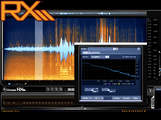
One of three new modules in RX 6 Advanced that use machine learning and intelligent signal processing (the others are De-rustle and Dialogue Isolate), De-wind will reportedly only attenuate intermittent wind gusts that don’t distort a microphone; it regards constant wind noise to be part of the desired noise floor.
The module’s Crossover Frequency slider delimits how high in fre- quency (up to 1.5 kHz) the processing will act on the signal, while the Reduction slider sets the balance between wind-noise reduction and the original signal (see Fig. 1). The Fundamental Recovery slider re-synthesizes lower voice harmonics that have been obscured by wind noise, and the familiar Artifact Smoothing slider (also included in legacy noise-reduction modules) reduces watery-sounding artifacts that can occur with FFT-based processing.
I tried De-wind on the windiest track I could find in all my past post-production sessions—a female dialog track that was severely tainted by extremely strong low-frequency wind gusts that almost completely obscured the voice at times. Simply put, De-wind is a virtual hurricane shelter for dialog tracks. The module eliminated the track’s low-frequency wind gusts—gusts that, during the original session, the RX 5 Advanced De-noise plug-in could not completely quell.
A moderately loud, airy wind—naturally modulating slightly in intensity—remained. Another new module, Dialogue Isolate, dealt with that in short order. I simply boosted the Dialogue Gain slider to the max and lowered the Noise Gain slider all the way to favor speech over noise, then raised the Separation Strength slider slightly to 1.5 (on a scale of 0 to 10) to attenuate the wind. This transparently reduced wind noise to that of a light breeze (I could’ve attenuated it more), which made sense of waving vegetation in the video without sounding obtrusive.
CLOTHES CALL, MOUTH OFF
The De-rustle module uses machine learning to attenuate the sound of clothing brushing against a lav mic. Two controls are all you need: Raise the Reduction strength slider to attenuate the rustling noise more (at the potential expense of speech clarity at high settings), and raise the Ambience preservation slider to retain more of the noise floor and background ambience (which De-rustle might otherwise remove).
De-rustle was very effective at reducing lav noise that was only about 3 to 6 dB lower than—and overlapping—male speech on the same track. Turning up the Reduction strength slider about two-thirds of the way attenuated the rustling noises almost to the point of inaudibility. The track suffered only a moderate reduction in depth, and clarity of speech was not noticeably impacted—an acceptable tradeoff. Once again, I was extremely impressed.
The new Mouth De-click module and plug-in are optimized for removing the sounds of mouth clicks and lip smacks. Aside from the fact that it includes no drop-down menu for selecting alternate algorithms, its control set and operation are the same as with the De-click module.
In A/B comparisons treating an adult fe- male dialog track, RX 5 De-click and RX 6 Advanced Mouth De-click were equally effec- tive at removing extremely loud mouth clicks and lip smacks vented by an off-mic, hyperactive child (up to 6 dB louder than the adult’s speech!). Mouth De-click, however, better-pre-
served bass spectra in the underlying track and introduced far less audible watery-sounding artifacts—a definite improvement.
MUSIC PRODUCTION
The new De-bleed module attenuates or removes bleed in a track from an off-mic source. To use De-bleed, you have to import two tracks into the standalone RX 6 Advanced application: the track containing both desired audio and unwanted bleed (“Active Track”), and a track that contains only the audio from the source of the bleed (“Bleed Source Track”). (iZotope doesn’t recommend using De-bleed in Composite View to treat multiple tracks at once.) The two tracks must have matching sampling rates and be time-aligned within a few milliseconds of each other.
The De-bleed module is used on the Active Track. In De-bleed’s interface, you select the Bleed Source Track from a dropdown menu. After making a time-range selection in the Active Track where the bleed is most apparent, click on De-bleed’s Learn button to initiate the module’s analysis of the problem. After the analysis is complete, the center of the interface shows a spectral display of either the Bleed Source Track or Active Track, depending on which associated button you click (see Fig. 2). Drag the Reduction strength slider to the right to progressively remove more bleed, and ad- just the Artifact Smoothing slider as needed to avoid unnatural sound.
Izotope Rx- 7 Advanced Dat Tape Source 2
I used De-bleed on multimiked tracks for a male singer who was simultaneously playing acoustic guitar. De-bleed did an amazing job reducing guitar bleed into the singer’s mic. Any higher than a 0.3 Reduction strength setting (very low) thinned the singer’s deep bass register. But even such ostensibly light processing was remarkably effective at reducing bleed to an acceptable level.
Used on the same vocal track, the new Breath Control module was both extremely effective and transparent. The module has two modes of operation: Gain mode applies the same amount of gain reduction to all detected breaths, while Target mode lowers only loud breaths to your specified target level.
Izotope Rx Free
I also got fantastic results on the same track using the new De-ess module (also available as a plug-in), which lets you use either a spectral or more conventional mode of processing. Spectral mode uses multiband compression (using dozens of bands) and spectral shaping to achieve ultra-smooth and transparent results—without audible modulation—on complex programs. Love it!
Omnisphere patch torrent. You don’t have to build your own starting template. Amazing!!!”– Constantin. It’s very easy to reselect different patches for use – but having a set of sounds loaded can help speed up the process of getting deeper into songwriting. This is the 24th library we have released for Omnisphere but is the first library designed to give songwriters Multiple MIDI Channel MULTIS that are designed for composers to call one up and immediately start writing music in multiple genres spanning over 30 years of popular music.By calling up one of these 13 Multis, 6 – 8 patches are loaded up – each sound on its own MIDI Channel so that you can start writing.
Izotope Rx 7
Obviously, De-bleed, Breath Control and De-ess also have uses in post-production. And while there are other de-essers and breath attenuators available (including impressive plug-ins made by iZotope), many of RX 6 Ad- vanced’s other new modules offer veritable breakthroughs in audio repair, effectively eliminating noise that was heretofore impossible to remove. RX 6 Advanced is a stunning achievement and a must-have for anyone working in post-production.