- Connect Yamaha Keyboard To Garageband Ipad Free
- Connect Midi Keyboard To Ipad
- Connect Yamaha Keyboard To Garageband Ipad Pro
Connecting USB-based MIDI devices to your iPad is a snap! Many apps like Garage Band, iPolysix, and Tabletop support small devices. Start by getting the Lightning to USB Camera Adapter. (For older iPads, the 30-pin to USB Camera Kit also works.). The keyboard, through the USB port, should be able to connect to your laptop. In the past, MIDI Keyboards were connected through the use of Pin Drivers, but new MIDI Keyboards usually use USB. If you want to connect an older keyboard into Garageband, you’ll need a MIDI to USB adaptor.
Jul 03, 2009 To use it as a midi controller you need to connect a midi cable to the midi out jack on the keyboard and then connect the cable to a midi interface box, and connect that box to your computer with a USB cable. Digital Piano (Yamaha P-125) connected to GarageBand - I can hear 2 sounds (piano and selected instrument) Aug 30th, 2019, 02:38 So I just bought a lightling to USB adapter so I can connect my digital piano (Yamaha P-125) to my iPad. Nov 13, 2019 Connect your wired keyboard to the adapter. Test the keyboard in an app like Notes. If it doesn't work, try connecting the devices in reverse order by first connecting the wired keyboard to the USB Camera Adapter and then connecting the adapter to the iPad. How to Use Real Musical Instruments with GarageBand on Your iPad. This plugs into your dock connector and gives you a USB port, into which you can connect a USB keyboard. There are also MIDI.
With the exception of a few dedicated iOS-specific models, most MIDI controller keyboards require another piece of hardware to be placed in between them and your iOS device in order for your Core MIDI apps to recognize and respond to your MIDI controller. You have a few different ways you can go.
iOS MIDI interface
One way to go is to purchase a dedicated iOS MIDI interface, or an iOS audio-and-MIDI interface that gives you microphone or guitar connections (or both) in addition to a MIDI connection. Examples of audio-and-MIDI interfaces on the market include the IK Multimedia iRig PRO, the Alesis I/O Dock II, and the Behringer iS202.
If you only need MIDI and don’t plan on recording audio, a dedicated iOS MIDI interface is an economical way to go, and more are being released all the time. For instance, the new IK Multimedia iRig MIDI 2 gives you the option of Lightning and 30-pin connections for iOS, or USB connections for Mac and PC. It features MIDI in, out, and thru ports.
If you want to have the option to set up a multi-machine setup with four MIDI ins and four MIDI outs, and the ability to pass audio from one machine to the next, you might consider iConnectivity’s new iConnectMIDI4+, which, with all its capabilities, sells only for about $200.
Connect Yamaha Keyboard To Garageband Ipad Free
Connect Midi Keyboard To Ipad
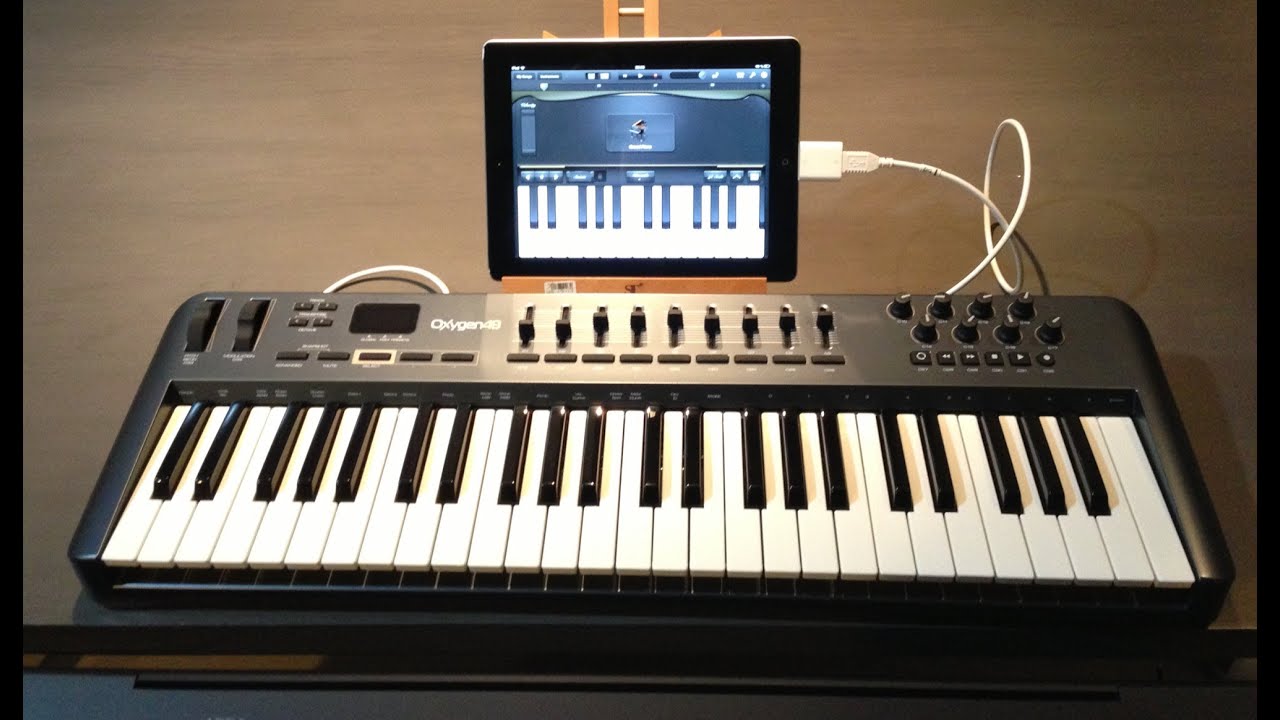
Drum loops for garageband. To connect a controller keyboard with an iOS interface, first connect the interface to your iOS device’s dock port. Next, plug the keyboard’s MIDI out to the MIDI in on the interface using either a standard MIDI cable or a cable that comes with the unit, depending on the interface you have. The keyboard’s MIDI out is where messages coming from the keyboard — including note-ons and note-offs, CC data, and more — are sent.
The interface’s MIDI in port takes that data and brings it into your iOS device and makes it available for your app.
Before MIDI came along, synthesizers used control voltage (or CV) to pass messages like notes and performance data between different devices. CV isn’t common to iOS interfaces yet, but some enterprising souls allow you to pass MIDI to digital devices and CV to analog devices for some truly impressive synth rigs. If you feel like geeking out, check out apps like Brute LFO and buy the cable you’ll need (one end should be the standard headphone to plug into the phone, and the other end whatever the analog synth accepts).
Connecting controllers to iOS devices using USB
Another option for plugging in an external keyboard is to use a standard USB MIDI controller. “But wait, there’s no USB port on an iOS device,” you say. This is technically true, but you can add one very easily with Apple’s inexpensive Lightning-to-USB-camera adapter, for Lighting-equipped devices, or the Camera Connection Kit for iOS devices with 30-pin dock connectors.
When you do this, the MIDI controller world is your oyster, as you can choose from a large selection of USB MIDI interfaces.
In order to work with Apple’s Core MIDI, a USB MIDI controller must be USB Class Compliant, which means that it’s designed to work with your iOS device (or a computer) without the need to install a software driver. If driver installation is required, it won’t work on your iOS device.
A large percentage of USB controller keyboards are USB Class Compliant, and some even advertise themselves as being iOS compatible, if you use one of the Apple camera adapters.
Do your research and make sure your USB MIDI controller will work with iOS devices. Manufacturers who do produce compatible equipment will usually fall over themselves advertising this fact.
Connect Yamaha Keyboard To Garageband Ipad Pro
One more big advantage of connecting via USB to your iOS device is that you don’t need to plug a power adapter into the keyboard; it will be bus powered, which means it gets its power through the USB cable. As a result, you can connect your MIDI keyboard in places where there’s no AC power available — as long as your iPad’s battery is charged. However, longer chains of devices or larger devices might still need a separate power source — do your research and test first.